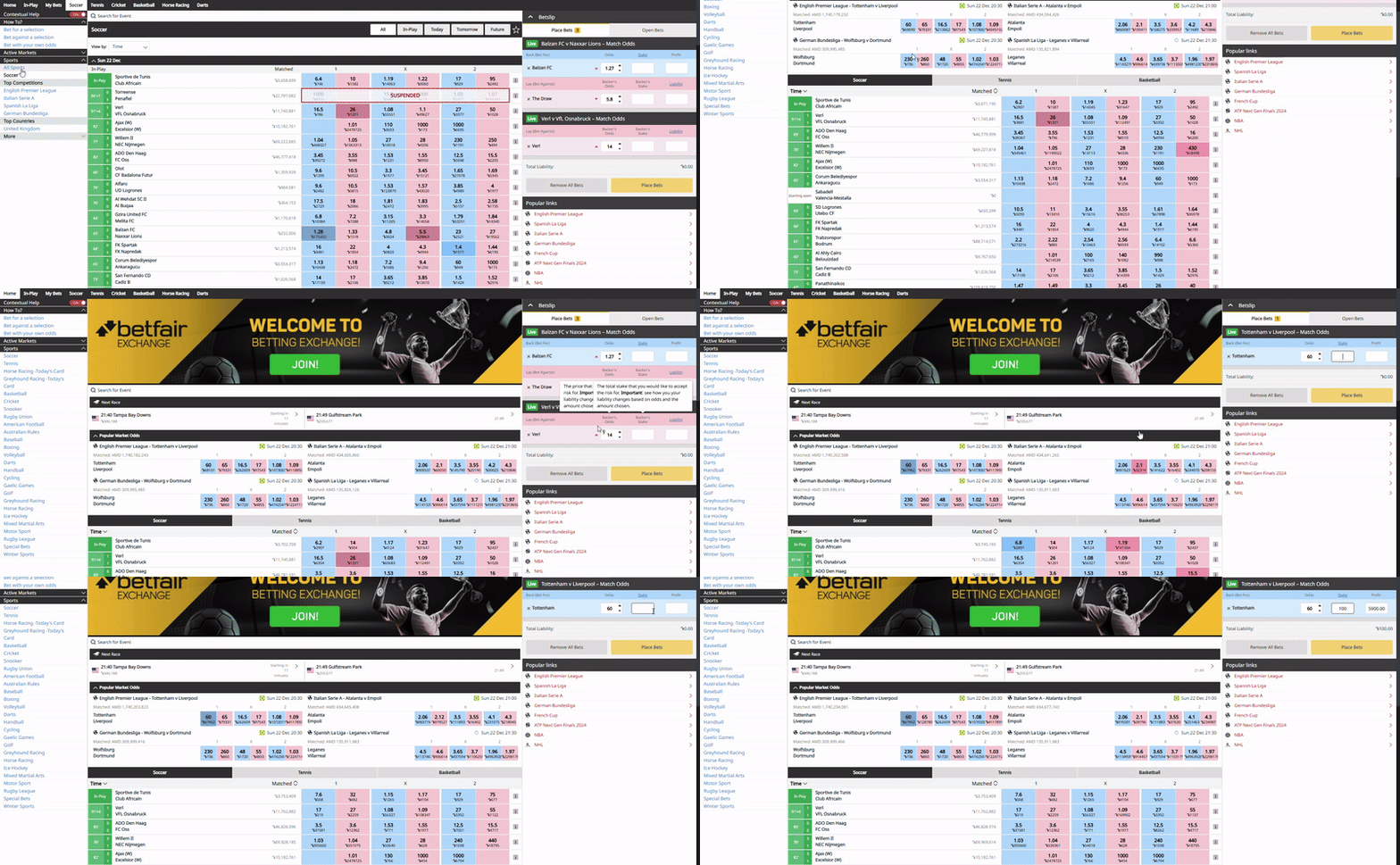
The product
Betfair Exchange is the world’s largest betting exchange. Instead of betting against a bookmaker, users trade with each other: one side backs an outcome, the other lays it, and the exchange matches them. Alongside the exchange, the product family includes casino, poker and bingo.
What makes it complex
- Prices are made by users, not set by an operator. Available odds and liquidity on every market change continuously as orders are placed, matched and cancelled.
- Orders have a lifecycle. A bet can be unmatched, partially matched, matched or settled — and the product has to represent each state correctly, in real time.
- A large, long-lived product. Changes have to fit an established architecture, established conventions and the work of many other contributors.
My responsibility
I delivered production features as part of a cross-functional team, working with product owners, managers, QA, backend engineers and other engineers on complex business workflows. Alongside feature work, I improved performance, reusability and code quality through refactoring, code reviews, reusable components and better integration patterns, and took part in technical discussions and estimation.
What mattered
- Understanding the domain before the interface. Exchange mechanics — backing and laying, matching, liquidity — decide what the product has to show and when.
- Integration patterns over one-off wiring. Clear, reusable patterns for working with backend services make complex workflows easier to change safely.
- Incremental improvement. In an established codebase, performance and quality improve through steady refactoring and review rather than rewrites.
Constraints and trade-offs
- Working inside an existing architecture. Improvements have to be compatible and incremental.
- Correctness first. In a financial-style product, showing a stale or wrong state is worse than showing it a moment later.
What changed
Production features shipped into the exchange product, with performance, reusability and code-quality improvements delivered alongside them.